• Main Site
  • About Us
  • Volunteer
  • Contact
Stay in touch and "Follow us" on social media!
Friday, December 12, 2025
MHRCET
  • Home
  • Our Blog
  • Articles
  • Share Your Story
  • In The News
No Result
View All Result
  • Home
  • Our Blog
  • Articles
  • Share Your Story
  • In The News
No Result
View All Result
MHRCET
No Result
View All Result
Home Blog

Mental Health Issues Amid Lower COVID-19 Cases

in Blog
0
Mental Health Issues Amid Lower COVID-19 Cases
18
SHARES
49
VIEWS
Share on FacebookShare on TwitterShare on Pinterest

by Isabella Benn

Are you interested in learning about lasting mental health challenges as COVID-19 cases decline? If you’re like most people who have likely struggled with mental health during this pandemic, continue reading. Mental health care can be complex and confusing to access. However, connecting with a team of professionals that specialize in navigating behavioral health makes the process significantly less stressful. 

In this blog, we’ll discuss the long-term impacts of COVID-19 and how it affects your mental health. Before we dive in, make sure to subscribe to our quarterly newsletter to stay up-to-date with current news, articles, policy changes, and helpful information.

Now, let’s discuss mental health issues amid lower COVID-19 cases.

Most people are experiencing the negative impacts associated with the pandemic and economic difficulties. Individuals already struggling with substance use and mental health disorders pre-pandemic are now facing additional barriers to care. Before the pandemic, one out of ten individuals in the United States showed signs of depression or anxiety. During the pandemic, approximately four out of every ten adults in the U.S. reports symptoms consistent with depression and anxiety disorders. A 2020 poll administered by the Kaiser Family Foundation showed that individuals experienced increased challenges with poor sleep, unhealthy eating habits, increased substance use, and exacerbated chronic health conditions.

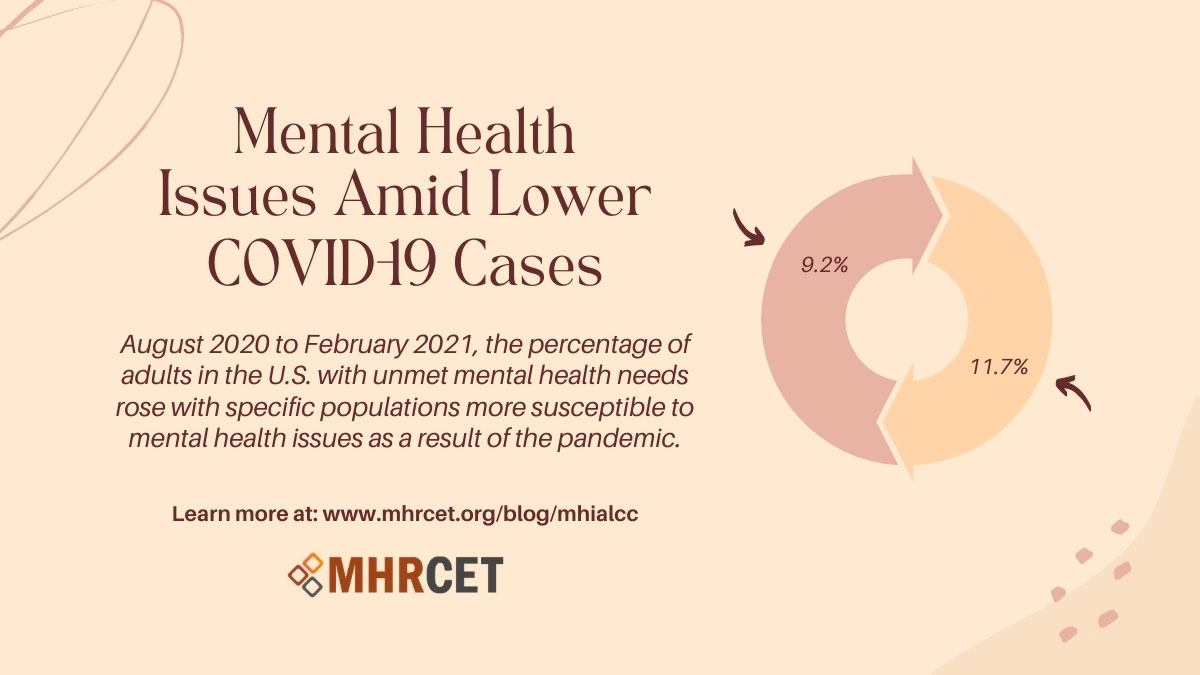
From August 2020 to February 2021, the percentage of adults in the U.S. with unmet mental health needs rose from 9.2% to 11.7% with specific populations more susceptible to mental health issues as a result of the COVID-19 pandemic. Adults that did not graduate high school and young adults ages 18-29 documented increased mental health symptoms and barriers to care.

People are working through death anxiety, social anxiety, loss of loved ones, feelings of being unsafe, and a complete disruption of society as we knew it. Dr. Ksera Dyette warns that people should be mindful of what she calls “the crash.” During a traumatic event emotional processing is on hold. Once the sense of danger dissipates a crash occurs when the mind and body can begin feeling and processing.

COVID-19 trauma has temporarily masked mental and physical health conditions. PTSD, nightmares, and flashbacks are critical concerns for first responders. Everyone should be mindful of the adjustment period in terms of social contacts and energy levels.

The collective global trauma everyone is experiencing must be considered at all points of care, including crisis response, hospitalization, and outpatient mental health treatment. All things considered, once the virus is gone the trauma and mental health issues will remain.

References

https://www.cdc.gov/mmwr/volumes/70/wr/mm7013e2.htm?s_cid=mm7013e2_w

https://kff.org/coronavirus-covid-19/issue-brief/the-implications-of-covid-19-for-mental-health-a nd-substance-use/

https://maximumfun.org/episodes/depresh-mode/what-to-expect-when-the-virus-is-gone-but-covid-trauma-goes-on/

Related Posts

Men and Mental Health

Men and Mental Health

Anxiety Disorders

Anxiety Disorders

Suicide Prevention Awareness Month

Suicide Prevention Awareness Month

How to Provide Mental Health Support

How to Provide Mental Health Support

Instagram Posts

  • This month, we recognize and honor the unwavering commitment of caregivers. Supporting individuals who have experienced trauma, instability, or loss requires extraordinary compassion, patience, and resilience. Whether you
  • When we talk about mental health, we normalize the experiences that so many people face…stress, anxiety, depression, trauma, and more. Having an open discussion also drives systemic change. It challenges outdated beliefs, informs better policies, and promotes access to care. These conversations are the first step toward building a more compassionate and inclusive society.

Get involved and join the conversation.
  • Bebe Moore Campbell Minority Mental Health Month is a time to raise awareness and uplift the voices of BIPOC communities. This month, we honor her legacy by continuing the work she started: advocating for equity, healing, and culturally responsive care.

"Learn more about our youth-led initiative at www.mhrcet.org."

#minoritymentalhealthmonth #bebemoorecampbell #youthmentalhealth #mentalhealthequity #mhrcet
  • Today, we recognize the invisible wounds carried by many young people, especially those from marginalized communities who have experienced trauma.

Post-Traumatic Stress Disorder (PTSD) doesn’t always look the same in youth. It can show up as anxiety, withdrawal, anger, or even academic struggles. For marginalized youth, the effects of trauma are often compounded by systemic barriers, discrimination, and lack of access to mental health resources.

In observance of this day, let’s:
-  Start conversations about trauma and healing
-  Advocate for trauma-informed care in schools and youth programs
-  Support organizations that uplift and empower youth mental health

Every young person deserves to feel safe, seen, and supported. Healing is possible and awareness is the first step.

#PTSDawareness #youthmentalhealth #traumainformed #marginalizedvoices #healingtogether

Recent Topics

MHRCET is comprised of caring, dedicated, and mission driven individuals working toward the common goal of helping those with mental health and recovery issues.

Read more

  • Contact
  • Privacy Policy
  • Terms & Conditions

Copyright © 2018-2025 Mental Health and Recovery Counseling Education and Training All Rights Reserved.

Welcome Back!

Login to your account below

Forgotten Password?

Retrieve your password

Please enter your Username to reset your password.

Log In
No Result
View All Result
  • Home
  • Our Blog
  • Articles
  • Share Your Story
  • In The News

Copyright © 2018-2025 Mental Health and Recovery Counseling Education and Training All Rights Reserved.

Skip to content
Open toolbar Accessibility Tools

Accessibility Tools

  • Increase TextIncrease Text
  • Decrease TextDecrease Text
  • GrayscaleGrayscale
  • High ContrastHigh Contrast
  • Negative ContrastNegative Contrast
  • Light BackgroundLight Background
  • Links UnderlineLinks Underline
  • Readable FontReadable Font
  • Reset Reset
  • HelpHelp