• Main Site
  • About Us
  • Volunteer
  • Contact
Stay in touch and "Follow us" on social media!
Friday, December 12, 2025
MHRCET
  • Home
  • Our Blog
  • Articles
  • Share Your Story
  • In The News
No Result
View All Result
  • Home
  • Our Blog
  • Articles
  • Share Your Story
  • In The News
No Result
View All Result
MHRCET
No Result
View All Result
Home Blog

The Line of Communication Between You and Your Child

in Blog
0
The Line of Communication Between You and Your Child
20
SHARES
53
VIEWS
Share on FacebookShare on TwitterShare on Pinterest

Terri A. Contributor

Many children have doubts and fears and may feel anxious from time to time affecting their mental and physical development. They may also feel hesitant about opening up to their parents, as they feel like no matter what they say they will never be heard.

Studies show children are uncomfortable sharing their feelings with their parents. Here are the most repeated answers from both girls and boys as to why kids feel uncomfortable and struggle to talk openly with their parents:

  • “They won’t understand.”
  • “I don’t want to bother them.”
  • “It’s awkward.”
  • “We’re not that close!”

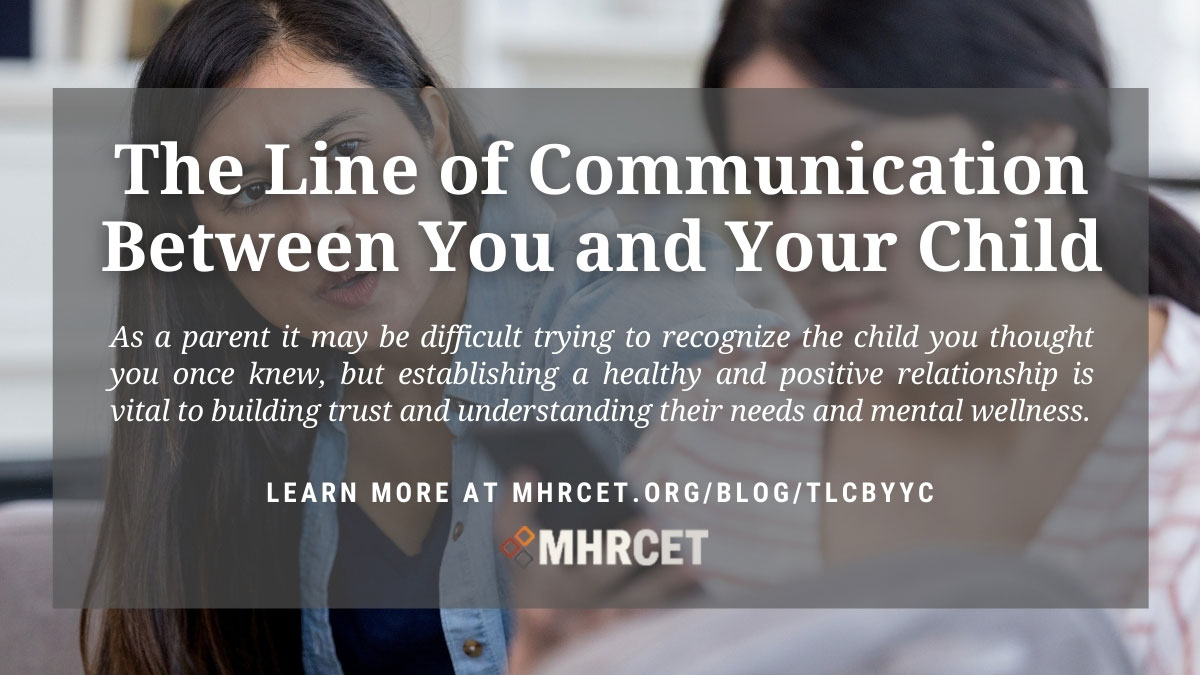
Significant developmental changes take place when going through teenage stages of life. Youth experience mental and physical transformations while trying to figure out who they are and who they’re becoming. As a parent it may be difficult trying to recognize the child you thought you once knew, but establishing a healthy and positive relationship is vital to building trust and understanding their needs and mental wellness. Make sure you’re creating repeated opportunities for discussions to take place. After all, it isn’t just about talking to your child, but about talking with your child.

Talking and listening to children can do many things, such as:

  • Establish a bond giving them the confidence to share their thoughts
  • Help them form better relationships and build a sense of worth
  • Build trust in initiating conversations beneficial to both parties
  • Allow children to feel safe and secure in expressing themselves

Feeling connected and greeted is indispensable to a child’s positive adjustment, self-identification, and sense of trust in others and themselves. Parents should be open to talk with their children about an array of topics, whether it is a feeling of anger, joy, frustration, fear, or anxiety. Try to understand what’s behind your child’s words by watching their facial expression and body language. Letting them share their hopes, dreams, and fears will help you gain a more profound understanding of your child. Though you may lead a busy life, taking a small amount of time to bond will allow them to feel heard and valued.

Overall, opening the line of communication between you and your child is a decisive way to make sure you form an absolute relationship for the rest of your lives.

Related Posts

Men and Mental Health

Men and Mental Health

Anxiety Disorders

Anxiety Disorders

Suicide Prevention Awareness Month

Suicide Prevention Awareness Month

How to Provide Mental Health Support

How to Provide Mental Health Support

Instagram Posts

  • This month, we recognize and honor the unwavering commitment of caregivers. Supporting individuals who have experienced trauma, instability, or loss requires extraordinary compassion, patience, and resilience. Whether you
  • When we talk about mental health, we normalize the experiences that so many people face…stress, anxiety, depression, trauma, and more. Having an open discussion also drives systemic change. It challenges outdated beliefs, informs better policies, and promotes access to care. These conversations are the first step toward building a more compassionate and inclusive society.

Get involved and join the conversation.
  • Bebe Moore Campbell Minority Mental Health Month is a time to raise awareness and uplift the voices of BIPOC communities. This month, we honor her legacy by continuing the work she started: advocating for equity, healing, and culturally responsive care.

"Learn more about our youth-led initiative at www.mhrcet.org."

#minoritymentalhealthmonth #bebemoorecampbell #youthmentalhealth #mentalhealthequity #mhrcet
  • Today, we recognize the invisible wounds carried by many young people, especially those from marginalized communities who have experienced trauma.

Post-Traumatic Stress Disorder (PTSD) doesn’t always look the same in youth. It can show up as anxiety, withdrawal, anger, or even academic struggles. For marginalized youth, the effects of trauma are often compounded by systemic barriers, discrimination, and lack of access to mental health resources.

In observance of this day, let’s:
-  Start conversations about trauma and healing
-  Advocate for trauma-informed care in schools and youth programs
-  Support organizations that uplift and empower youth mental health

Every young person deserves to feel safe, seen, and supported. Healing is possible and awareness is the first step.

#PTSDawareness #youthmentalhealth #traumainformed #marginalizedvoices #healingtogether

Recent Topics

MHRCET is comprised of caring, dedicated, and mission driven individuals working toward the common goal of helping those with mental health and recovery issues.

Read more

  • Contact
  • Privacy Policy
  • Terms & Conditions

Copyright © 2018-2025 Mental Health and Recovery Counseling Education and Training All Rights Reserved.

Welcome Back!

Login to your account below

Forgotten Password?

Retrieve your password

Please enter your Username to reset your password.

Log In
No Result
View All Result
  • Home
  • Our Blog
  • Articles
  • Share Your Story
  • In The News

Copyright © 2018-2025 Mental Health and Recovery Counseling Education and Training All Rights Reserved.

Skip to content
Open toolbar Accessibility Tools

Accessibility Tools

  • Increase TextIncrease Text
  • Decrease TextDecrease Text
  • GrayscaleGrayscale
  • High ContrastHigh Contrast
  • Negative ContrastNegative Contrast
  • Light BackgroundLight Background
  • Links UnderlineLinks Underline
  • Readable FontReadable Font
  • Reset Reset
  • HelpHelp